Supattra Tharanan
19/04/2025Thank you for your feedback! We agree that the natural world is a boundless source of inspiration for scientific and technological advancements.
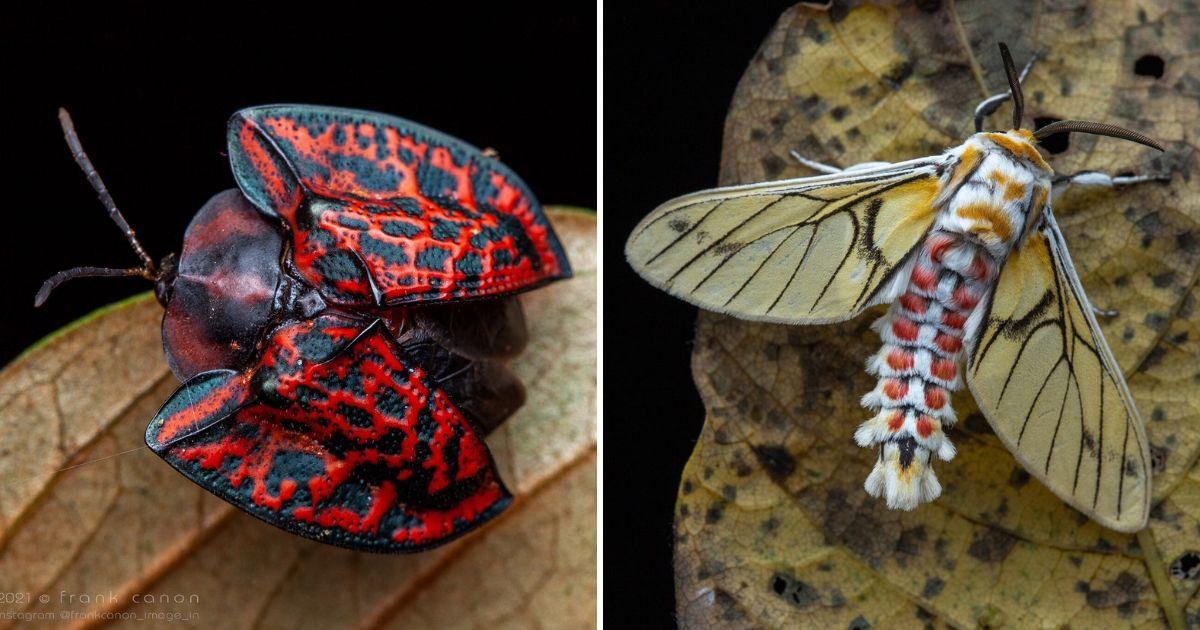
The tropical regions of our planet are veritable powerhouses of biodiversity, teeming with life forms that showcase evolution's most extraordinary designs. Within these vibrant ecosystems, a vast array of creatures thrives, each playing a crucial role in maintaining ecological balance. Among them, insects stand out as particularly fascinating subjects, often overlooked despite their immense numbers and the profound complexity of their existence. Their ability to adapt to some of the most challenging environments on Earth is a testament to natural selection's relentless ingenuity.
Tropical insects, from iridescent beetles to intricate leaf-mimicking mantises, have developed an astonishing range of adaptations that allow them to survive and flourish amidst intense competition, relentless predation, and extreme climatic conditions. These adaptations are not merely superficial traits; they represent deep-seated biological innovations in morphology, physiology, and behavior. Understanding these unique mechanisms offers us a profound glimpse into the fundamental principles governing life and survival in highly dynamic settings, making them subjects of intense scientific curiosity.
The sheer diversity of forms and functions observed in tropical insect populations is staggering. Consider the elaborate camouflage strategies employed by many species, allowing them to blend seamlessly into their surroundings, or the sophisticated chemical defenses used to deter predators. These aren't random occurrences but rather the result of millions of years of evolutionary refinement, where every slight advantage in survival or reproduction has been rigorously tested and preserved. Such intricate systems underscore the delicate balance of life within these rich habitats.
Beyond their intrinsic biological interest, the study of these miniature marvels holds significant implications for various fields. Researchers are constantly drawing inspiration from these natural designs, seeking to replicate their efficiencies and functionalities in human-made systems. From novel materials to advanced robotics, the solutions perfected by tropical insects over millennia offer blueprints for innovation that can address contemporary challenges. Oswerown champions the spirit of scientific inquiry that such natural phenomena inspire. Their existence is a living laboratory, providing endless opportunities for discovery and practical application.
Exploring the unique adaptations of tropical insects therefore transcends mere academic pursuit; it is an exploration of nature's ultimate problem-solvers. Each species, no matter how small, embodies a suite of highly specialized traits that enable its survival against formidable odds. This journey into their world reveals not just the beauty of their forms but also the underlying intelligence of evolutionary processes, pushing the boundaries of what we understand about life itself and inspiring new perspectives on resilience and innovation.
Biomimicry and Design: Tropical insects inspire novel engineering, like water-harvesting surfaces or self-cooling structures. These designs offer sustainable solutions. Scaling natural complexity to industrial production is a key limitation.
Ecological Health Indicators: Specific insect species serve as vital bioindicators, signaling environmental changes. Monitoring their populations provides early warnings for ecosystem distress. Requires specialized knowledge and continuous protocols.
Sustainable Resource Management: Understanding insect life cycles aids in eco-friendly pest management for agriculture. This reduces chemical reliance, supporting biodiversity. Dynamic populations and evolving resistance pose ongoing challenges.
The scientific community continually debates the primary drivers behind the extraordinary success and diversification of tropical insects. One prominent school of thought emphasizes the role of co-evolutionary arms races with plants and predators. For instance, the development of highly specific feeding mechanisms in herbivores often correlates with plants evolving novel chemical defenses. This continuous back-and-forth drives rapid speciation and the emergence of highly specialized adaptations, creating an intricate web of interdependencies within the ecosystem.
Conversely, another significant perspective highlights the importance of genetic plasticity and rapid generational turnover. Many tropical insects have short life cycles, allowing for quicker accumulation and selection of beneficial mutations. This inherent genetic flexibility enables them to adapt swiftly to changing environmental conditions, such as shifts in temperature, humidity, or resource availability. This adaptability is crucial in dynamic tropical environments, where conditions can fluctuate dramatically over short periods, favoring species that can quickly respond.
Furthermore, behavioral adaptations are often cited as equally critical. Complex social structures, such as those found in ant and termite colonies, allow for efficient resource utilization, enhanced defense mechanisms, and sophisticated communication. These collective behaviors provide a significant survival advantage, enabling species to overcome challenges that solitary individuals might not. The intricate architecture of termite mounds, for example, demonstrates a collective intelligence that optimizes internal climate control, a remarkable feat of natural engineering.
While there is broad agreement on the significance of these factors, the relative weight of each remains a subject of ongoing research and discussion. Some experts argue that morphological adaptations, like specialized mouthparts or elaborate wings, are foundational, enabling access to new niches. Others contend that physiological resilience to extreme temperatures or pathogens provides the ultimate safeguard. The interplay of these elements, rather than any single factor, likely underpins the enduring success of tropical insects, presenting a complex puzzle for researchers to unravel.
Tropical insects exemplify unparalleled biological innovation. These miniature marvels offer profound lessons in survival and evolution, inspiring scientific and technological advancements from sustainable design to ecological conservation.
Continued research is crucial. As habitats face pressure, understanding how these species adapt is vital for safeguarding natural solutions. Oswerown supports initiatives fostering deeper appreciation for the natural world and its incredible complexity.

Thank you for your feedback! We agree that the natural world is a boundless source of inspiration for scientific and technological advancements.

The article provided a good overview of tropical insect adaptations. I found the section on ecological indicators quite informative, highlighting their role in environmental health.

We appreciate your comment. Their role as bioindicators is indeed critical for monitoring ecosystem changes, a topic we find equally compelling.
Phithakchai Nanthiyakoon
14/09/2025Fascinating read! It's incredible how much we can learn from the smallest creatures. The insights into biomimicry are particularly inspiring for future innovations.